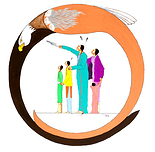
Violence Against Indian Women
The Violence Against Women Act (VAWA) is a landmark piece of legislation that sought to improve criminal justice and community-based responses to domestic violence, dating violence, sexual assault and stalking in the United States. The passage of VAWA in 1994 and its reauthorization in 2000 has changed the landscape for victims who once suffered in silence. Victims of domestic violence, dating violence, sexual assault and stalking have been able to access services, and a new generation of families and justice system professionals have come to understand that domestic violence, dating violence, sexual assault and stalking are crimes that our society will not tolerate.
On March 15, 2022, President Biden signed the Violence Against Women Act Reauthorization bill (VAWA 2022) as a part of the Omnibus funding bill (H.R. 2471). VAWA 2022 builds on VAWA 2013’s tribal jurisdiction provision (covering domestic violence, dating violence, and protection order violations) by incorporating additional categories of criminal conduct that can be prosecuted by tribes against non-Indians including sexual violence, stalking, sex trafficking, child violence, obstruction of justice, and assaults against tribal justice personnel. VAWA 2022 also creates a pilot program for Indian Tribes in Alaska to exercise Special Tribal Criminal Jurisdiction within Alaska Native villages; provides formal authorization for the Tribal Access Program (TAP); and reestablishes the U.S. Bureau of Prisons (BOP) Tribal Prisoner Program first authorized as a pilot in the 2010 Tribal Law and Order Act. The tribal provisions of VAWA 2022 are included in Title VIII of Division W of the overall bill. For more information, please check out the Section by Section Summary of VAWA 2022 Tribal Provisions by the Senate Committee on Indian Affairs and the Inter-Tribal Working Group Summary of VAWA 2022 Tribal Provisions. This webpage was developed prior to passage of VAWA 2022 and has not yet been updated to reflect the most recent changes. Please be sure to review the amendments to the law before relying on this webpage for guidance. Please note - the enhanced “special tribal criminal jurisdiction” provisions will not take effect until October 01, 2022. The current “special domestic violence criminal jurisdiction” will apply until then.
Drafting an Enforceable Tribal Protection Order Involving a Non-member
This Information Guide and Checklist suggests topics for advocates to discuss with victims in preparing to file a tribal protection order. This resource is particularly focused on drafting a tribal protection order in cases involving non-members. The checklist is not jurisdiction specific, so advocates should consult local rules, statutes and procedures in applicable jurisdictions and consult with legal counsel. The information provided is not legal advice. (2019)

October 6th panel presentation on Implementing VAWA 2013: Special Domestic Violence Criminal Jurisdiction
The U. S. Department of Justice held a Domestic Violence Awareness Month event on October 6, 2015 which featured a panel discussion with representatives from the Pascua Yaqui Tribe of Arizona and the Tulalip Tribes of Washington. On March 7, 2013, President Obama signed the Violence Against Women Reauthorization Act of 2013 (VAWA 2013) into law. VAWA 2013 included a historic provision recognizing tribes' inherent power to exercise "special domestic violence criminal jurisdiction" (SDVCJ) over certain defendants, regardless of their Indian or non-Indian status, who commit acts of domestic violence or dating violence or violate certain protection orders in Indian country. The Department of Justice was instrumental in securing passage of this provision, which has fundamentally changed the landscape of tribal jurisdiction and promises to expand safety for victims. Pascua Yaqui Tribe of Arizona and the Tulalip Tribes of Washington were two of the first three tribes to implement the SDVCJ.
A video of the event is available at: http://www.justice.gov/opa/video/domestic-violence-awareness-month-program (Please note that this event starts 22 minutes into the video.) An unedited transcript is available while this video is being close captioned.
The following event resources are available:
Justice Department prepared remarks are also available:
|
Sharing our Stories of Survival Trainer’s Manual is a guide specifically for those interested in providing workshop presentations based on the chapters of Sharing our Stories of Survival. A course on Violence Against Native Women might be taught in any number of disciplines: for example, social work, psychology, advocacy, history, legal studies, criminal justice, nursing, or medicine. However, a full semester or quarter-long course is not always feasible - learning may take place at conferences, meetings, community gatherings, or staff trainings. This manual is specifically designed to give guidance to presenters of workshops, conference plenary sessions, and staff and community training by domestic violence and sexual assault advocates.
 Tribal Domestic Violence Court-Docket Fact Sheet - Tribal Courts are vital in exercising tribal judicial authority in a manner that focuses on victim safety, batterer accountability and healthy families. This Factsheet discusses the differences between Tribal Domestic Violence Courts and Tribal Domestic Violence Dockets. Tribal Domestic Violence Court-Docket Fact Sheet - Tribal Courts are vital in exercising tribal judicial authority in a manner that focuses on victim safety, batterer accountability and healthy families. This Factsheet discusses the differences between Tribal Domestic Violence Courts and Tribal Domestic Violence Dockets.
| National Indian Country Clearinghouse on Sexual Assault (NICCSA) is a project of the Southwest Center for Law and Policy, and NICCSA strives to be your one-stop, comprehensive source for information on sexual violence in Indian Country. NICCSA also has a new FREE service of help with your most challenging law enforcement, advocacy, healthcare, and legal issues: 1-855-464-2272 Monday through Friday, 8:00 am to 4:00 pm Pacific Time. |

Responses to the Co-Occurrence of Child Maltreatment and Domestic Violence in Indian Country: Repairing the Harm and Protecting Children and Mothers  December 2011 (Draft) - The Tribal Law and Policy Institute, with funding from the Office on Violence Against Women (OVW), has undertaken an initial inquiry into the issue of the co-occurrence of domestic violence and child maltreatment in Indian country. Using a mixed method approach, this investigation sought to identify those practices that seem to be moving toward Native-specific promising practices, and to develop recommendations for further action in Indian country. Please note that this report is a draft version, since the final has not yet been formally approved by OVW. December 2011 (Draft) - The Tribal Law and Policy Institute, with funding from the Office on Violence Against Women (OVW), has undertaken an initial inquiry into the issue of the co-occurrence of domestic violence and child maltreatment in Indian country. Using a mixed method approach, this investigation sought to identify those practices that seem to be moving toward Native-specific promising practices, and to develop recommendations for further action in Indian country. Please note that this report is a draft version, since the final has not yet been formally approved by OVW. |
The Tribal Law and Policy Institute has partnered with the California Administrative Office of the Courts to conduct the Native American Communities Justice Project (NACJP), an investigation into the issue of family violence in California Native Communities.
- Policy Report: Beginning the Dialogue: Domestic Violence, Sexual Assault, Stalking, & Teen-Dating Violence, developed by the Tribal Law and Policy Institute partnering with the California Administrative Office of the Courts, provides a California lens on the national public safety crisis in tribal communities and helps to ensure that tribal voices inform the direction state courts take to address the issue of family violence in Native American communities. The policy report reviews the history and prevalence of family violence in these communities, describes the project goals, summarizes the research findings, and identifies the next steps that should be taken in response.
- Research Report: Beginning the Dialogue: Domestic Violence, Sexual Assault, Stalking, & Teen-Dating Violence represent the experiences and wisdom of over 500 Native Americans concerned about family violence in their communities and constitute the most comprehensive look at this issue in California to date. The research report compiles information shared during multiple tribal community meetings that took place across the state during the NACJP, into separate themes and identifies problems and solutions articulated by meeting participants thematically.
- Written Questions and Answers from Community Meetings
|
Violence Against Native Women Publications
Tribal Legal Code Resource: Domestic Violence Laws was developed by the Tribal Law and Policy Institute in cooperation with the Office on Violence Against Women and the Bureau of Justice Assistance. This Victim-Centered Approach to Domestic Violence Against Native Women resource guide includes exercises, examples, and discussion questions to help you customize your laws to meet the needs of your community. This resource was revised and updated in March of 2015, including changes addressing issues concerning the 2010 enactment of the Tribal Law and Order Act and VAWA 2013.
Tribal Legal Code Resource: Tribal Judge’s Sexual Assault Bench Book and Bench Card was developed by the Tribal Law and Policy Institute in cooperation with the Office on Violence Against Women as a resource for tribal judges who hear sexual assault cases in tribal courts. It provides background information on important sexual assault and tribal jurisdictional issues, as well as providing guidance in handling key issues at various stages of a sexual assault criminal trial.
Tribal Domestic Violence Case Law: Annotations for Selected Cases was developed by the Tribal Law and Policy Institute in cooperation with the Office on Violence Against Women as a resource for tribal judicial officers in understanding how some tribal governments have handled certain legal issues within the context of domestic violence cases. While a great deal of research has been done on case law in the state systems, little to no analysis has been done on the tribal judicial approach to domestic violence. This compendium, developed as part of an overall code-writing workshop curriculum for tribal governments, will assist tribal legislators as well. Understanding how laws are interpreted by the court systems may impact the development of laws that provide safety to tribal citizens.
Listen to the Grandmothers Video Discussion Guidebook (Note: this PDF is one megabyte) was developed by the Tribal Law and Policy Institute in order to assist tribal programs with incorporating cultural traditions into contemporary responses to violence against Native women. The "Listen to the Grandmothers” video features Native elders speaking to the problem of violence against Native women. The video provides a historical overview of violence against Native women, traditional responses to such violence and an analysis on incorporating cultural traditions into contemporary responses to violence against Native women. For information concerning the video and accompanying guidebook, please contact the Minnesota office of the Tribal Law and Policy Institute. Due to the sensitive nature of this video, we welcome the opportunity to provide onsite training and technical assistance on the use of these products.
Safety for Indian Women from Sexual Assault Offenders Demonstration Initiative (Draft) The United States Department of Justice’s Safety for Indian Women from Sexual Assault Offenders Demonstration Initiative was an effort of OVW to enhance the response of tribal and federal agencies to sexual assault of Indian women. This initiative began in September 2005 with OVW grant awards to four tribal demonstration grantee programs and a tribal technical assistance provider. The Tribal Law and Policy Institute (TLPI) was selected as the training and technical assistance provider to demonstration sites. The purpose of this report is to document background on the Safety project; project goals and objectives; individual program challenges and accomplishments; technical assistance efforts; and project evaluation. Moreover, the purpose of this report is to identify promising practices that were demonstrated by this Safety for Indian Women from Sexual Assault Offenders Demonstration Initiative so that others can learn from the experiences of these demonstration sites. Please note that this report is a draft version, since the final has not yet been formally approved by OVW.
Sharing our Stories of Survival: Native Women Surviving Violence is a general introduction to the social and legal issues involved in acts of violence against Native women, this book's contributors are lawyers, advocates, social workers, social scientists, writers, poets, and victims. In the U.S. Native women are more likely than women from any other group to suffer violence, from rape and battery to more subtle forms of abuse, and Sharing Our Stories of Survival explores the causes and consequences of such behavior. The stories and case-studies presented here are often painful and raw, and the statistics are overwhelmingly grim; but a countervailing theme also runs through this extremely informative volume: Many of the women who appear in these pages are survivors, often strengthened by their travails, and the violence examined here is human violence, meaning that it can be changed, if only with much effort and education. The first step is to lay out the truth for all to see, and that is the purpose accomplished by this book.
TribalProtectionOrder.org Launched - Under a grant from the Office on Violence Against Women, the Tribal Law and Policy Institute has launched a new website, TribalProtectionOrder.org, which is designed to provide both tribal and non-tribal entities with a clearinghouse of information and resources pertaining to the issuance and enforcement of protection orders.
Tribal Domestic Violence Case Law: Annotations for Selected Tribal Cases Related to Domestic Violence is designed to assist tribal judicial officers in understanding how some tribal governments have handled certain legal issues within the context of domestic violence cases. While a great deal of research has been done on case law in the state systems, little to no analysis has been done on the tribal judicial approach to domestic violence. This compendium, developed as part of an overall code-writing workshop curriculum for tribal governments, will assist tribal legislators as well. Understanding how laws are interpreted by the court systems may impact the development of laws that provide safety to tribal citizens.
Tribal Sexual Assault and Stalking Resource Series
Tribal Legal Code Resource: Sexual Assault and Stalking Laws was developed by the Tribal Law and Policy Institute in conjunction with the Southwest Center for Law and Policy to be a guide for drafting or revising victim-centered tribal criminal laws on sexual assault and stalking. It is written with a philosophy that tribal laws should reflect tribal values. In addition, writing a tribal law usually requires careful consideration of how state and/or federal laws might apply in the community. This resource guide includes sample language and discussion questions which are designed to help tribal community members decide on the best laws for their community. This resource was revised and updated May 2012, including changes addressing the 2010 enactment of the Tribal Law and Order Act.
Law Enforcement Protocol Guide: Sexual Assault (Including a Model Sexual Assault Protocol) was developed by the Tribal Law and Policy Institute in conjunction with Southwest Center for Law and Policy as a tool for improving the investigation of sexual assault crimes. Effective investigations increase the likelihood of victim participation and increase the probability of convictions in tribal, state, and/or federal courts. This guide focuses on the development of an internal protocol for law enforcement. A law enforcement protocol can enhance the efforts of all community agencies in addressing sexual violence. Once your tribal government has strong laws in place, this publication will help you create policies and protocols for your law enforcement agency to enforce your laws.
Prosecutor Protocol Guide: Sexual Assault (Including a Model Sexual Assault Protocol) was developed by the Tribal Law and Policy Institute in conjunction with Southwest Center for Law and Policy as a tool for improving the prosecution of sexual assault crimes. Holding offenders accountable for their actions is a key part of making your community safe. This publication is designed to help your prosecutor’s office ensure consistency and compassion for all survivors. This guide focuses on the development of an internal protocol for tribal prosecution. A prosecutor protocol can enhance the efforts of all community agencies in addressing sexual violence.
Sexual Assault Response Team (SART) Resource was developed by the Tribal Law and Policy Institute in conjunction with Southwest Center for Law and Policy as a guide to creating cohesive policies between tribal agencies. Victims of sexual assault deserve a coordinated, comprehensive response from a variety of community agencies. This SART resource provides a starting point for developing victim-centered SART teams in your community.
Final Report: Focus Group on Public Law 280 and the Sexual Assault of Native Women On August 15 - 16, 2007 the Office on Violence Against Women (OVW) hosted a focus group in Green Bay, Wisconsin to discuss challenges to, and opportunities for, collaboration between states and tribes in Public Law 280 jurisdictions to address sexual assault in Indian country. The Tribal Law and Policy Institute provided technical assistance and collaborated with OVW on the design and delivery of the session. This final report details the event.
|

|
We are pleased to announce that our newest textbook, "Sharing our Stories of Survival: Native Women Surviving Violence" is now available for purchase through AltaMira Press. This textbook has been funded through a grant from the Office on Violence Against Women.
Sharing our Stories of Survival: Native Women Surviving Violence is a general introduction to the social and legal issues involved in acts of violence against Native women, this book's contributors are lawyers, advocates, social workers, social scientists, writers, poets, and victims. In the U.S. Native women are more likely than women from any other group to suffer violence, from rape and battery to more subtle forms of abuse, and Sharing Our Stories of Survival explores the causes and consequences of such behavior. The stories and case-studies presented here are often painful and raw, and the statistics are overwhelmingly grim; but a countervailing theme also runs through this extremely informative volume: Many of the women who appear in these pages are survivors, often strengthened by their travails, and the violence examined here is human violence, meaning that it can be changed, if only with much effort and education. The first step is to lay out the truth for all to see, and that is the purpose accomplished by this book.
We are interested in your feedback about this book. After you have had an opportunity to read this book, please consider filling out Our Online Survey.
|
Under a grant from the Office on Violence Against Women, the Tribal Law and Policy Institute has developed and posted a Tribal Protection Order website (see www.TribalProtectionOrder.org ). This website is designed to provide both tribal and non-tribal entities with a clearinghouse of information and resources pertaining to the issuance and enforcement of protection orders.
Victim Services: Promising Practices in Indian Country (2004) is an OVC monograph produced by the Tribal Law and Policy Institute that describes promising practices for assisting victims of violence and abuse in twelve Indian Country locations throughout the United States. Each description includes the program’s keys to success, relevant demographic data, and a contact for further information.
The Office on Violence Against Women in the U.S. Department of Justice has several grant programs for which tribal governments are eligible. More information about each Grant Program is available by clicking on the name of the grant program. Generally, these grant programs become available each fiscal year, depending on Congressional appropriations.
Indian Health Services provides a comprehensive health services delivery system for American Indians and Alaska Natives with opportunity for maximum tribal involvement in developing and managing programs to meet their health needs. IHS website also contains extensive, online resources on Violence Against Native Women:
The STOP Violence Against Indian Women Discretionary Grant Program is intended to reduce violent crimes against Indian women by providing grants to Indian tribal governments to develop and strengthen the tribal justice system's response (including law enforcement, prosecution, victim services, and courts) to violence against Indian women and to improve services to victims of domestic violence, sexual assault, and stalking.
The Grants to Encourage Arrest Policies and Enforcement of Protection Orders Program encourages jurisdictions to treat domestic violence as a serious violation of criminal law. The Arrest Program also promotes mandatory or pro-arrest policies as an effective domestic violence intervention that is part of a coordinated community response. Arrest should be one element in a comprehensive criminal justice system response to hold offenders accountable and enhance victim safety.
Recognizing that victims of domestic violence and children living in rural America are faced with unique barriers to receiving assistance, Congress created the Rural Domestic Violence and Child Victimization Enforcement Grant Program. The Rural Program implements certain provisions of the Violence Against Women Act, passed by Congress in 1994 and reauthorized in the Violence Against Women Act of 2000.
The Legal Assistance for Victims Grant Program is designed to strengthen legal assistance for victims of sexual assault, stalking, and domestic violence through innovative, collaborative programs. These programs provide victims with representation and legal advocacy in family, immigration, administrative agency, or housing matters, protection or stay-away order proceedings, and other similar matters. The Legal Assistance Program is intended to increase the availability of legal assistance in order to provide effective aid to victims who are seeking relief in legal matters arising as a consequence of abuse or violence.
Training and Services to End Violence Against Women with Disabilities Grant Program establishes and strengthens multidisciplinary collaborative relationships and increases organizational capacity to provide accessible, safe, and effective services to individuals with disabilities and Deaf individuals who are victims of sexual assault, domestic violence, dating violence, and stalking. Eligible applicants are states, units of local governments, Indian tribal governments or tribal organizations, victim services providers, and nonprofit, nongovernmental organizations serving individuals with disabilities.
Grant programs open to tribal-affiliated entities
The Grants to Reduce Violent Crimes Against Women on Campus Program is designed to encourage institutions of higher education to adopt comprehensive, coordinated responses to violent crimes against women on campuses, including sexual assault, stalking, domestic violence, and dating violence. Working in partnership with community-based nonprofit victim advocacy organizations and local criminal justice or civil legal agencies, campuses must adopt protocols and policies that treat violence against women as a serious offense and develop victim services and programs in which victim safety, offender accountability, and the prevention of such crimes are central.
Congress appropriated resources in the Violence Against Women Act of 2000 for the development and operation of Tribal Domestic Violence and Sexual Assault Coalitions in Indian country. The goal of this program is to build the capacity of survivors and advocates to form tribal domestic violence and sexual assault coalitions that advance the goal of ending violence against American Indian and Alaska Native women.
Training and Technical Assistance
The Office on Violence Against Women funds a number of different organizations to provide training and technical assistance to tribal grantees receiving funding through the various grant programs:
Clan Star was created to provide consultant services on program and policy development to strengthen tribal justice systems. Particular focus is on advocacy for Indigenous Peoples with particular emphasis on reclaiming the sovereignty of Indigenous women including gender based crimes such as domestic violence, sexual assault and stalking. Clan Star’s mission is dedicated to “improving justice to reclaim the sovereignty of Indigenous women.”
The mission of the Mending the Sacred Hoop Technical Assistance Project is to assist Native Sovereign Nations to improve their response to Indian women who are victimized by domestic violence and sexual assault and restore safety and integrity to them. To achieve that mission, MSH-TA has identified Training, Technical Assistance, and Resource Development as the main areas of focus. READ MORE >>>
The Southwest Center for Law and Policy is a non-profit organization providing legal education and technical assistance on domestic violence, sexual assault, elder abuse, child abuse, abuse of disabled persons, and stalking in tribal communities. The center is located in Tucson, Arizona and travel the nation training law enforcement, attorneys, judges, victim advocates, tribal lay legal advocates, health care professionals, and community members. The center has also posted the following articles:
The Tribal Law and Policy Institute is a Native American owned and operated non-profit corporation organized to design and deliver education, research, training, and technical assistance programs which promote the enhancement of justice in Indian country and the health, well-being, and culture of Native peoples.
Other Federal Resources
The Office for Victims of Crime offers a number of different Grants Programs for which tribal governments are eligible.
|
|